
December 18, 2025
Ingredient substitutions are common in the food and beverage world. Whether you are trying to navigate supply chain challenges, reduce costs, respond to regulatory updates, or looking to improve quality, your product will almost certainly go through changes.
No matter the reason, every reformulation still ends with the same question: “What impact did this have on our product?” A simple round of structured tastings can help answer this question, and it may be easier than you think.
Why Use Tasters?
Taste panels can be a quick and effective method to understand products in ways that analytical measurements cannot fully capture. A group of consumer tasters can tell you if they notice a change and if they like it, while trained tasters can deliver detailed flavor notes. Combining these viewpoints creates a more complete picture and allows teams to move forward with confidence.
Getting Started with the Right Question
To get started, it’s important to clearly define the question you’re trying to answer. We all want to understand the impact of a reformulation, but “impact” can mean very different things to different teams and stakeholders. If you’ve ever had someone ask to “add one last question” to a consumer survey, you know how quickly things can drift.
When we work with brands, our goal is to help narrow the focus to the smaller, immediate answers needed to keep a project moving. That clarity allows us to use faster, more straightforward tasting approaches that match the pace of the team.
Choosing Your Tasting Method
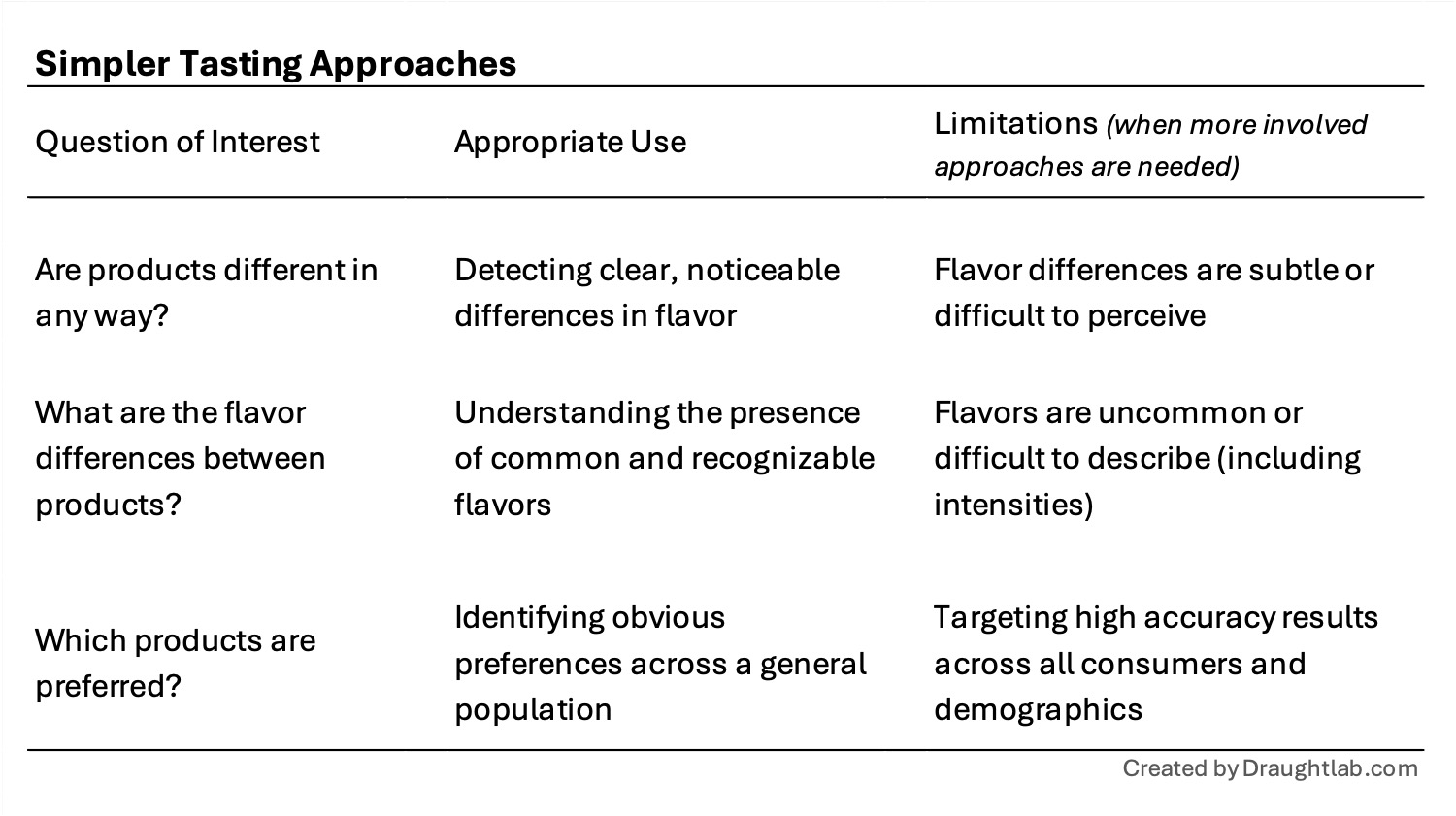
Not every question requires complicated methods or highly trained tasters. In many cases, especially when directional insights are sufficient, simple tasting approaches can provide fast, actionable feedback. These methods are best suited for addressing high-level questions about differences, flavor character, and broad preferences, but they also come with important limitations.
The table below outlines common “easy tasting” questions, when these approaches are appropriate to use, and situations where more rigorous sensory methods may be needed.
Whatever you choose, make sure your goals and methods are aligned so you can be set up for success. As always, you can reach out to DraughtLab if you want to talk out a situation, have a question, or need help getting started.
Interpreting Results
Tasting data doesn’t make decisions, it informs decision-makers. A significant difference in a discrimination test does not automatically mean a substitution should be rejected. It simply indicates that panelists could detect a change. The best decisions come from pairing sensory insights with practical considerations and business goals.
Tips for Being Successful
- Keep sample preparation consistent and well documented. Small differences outside the ingredient swap can mask or mimic real effects.
- Choose an appropriate number of tasters. Underpowered tests create uncertainty while overly large tests may waste resources.
- Use clear, concise instructions to guide your panel. Good briefings reduce noise and help panelists stay focused.
- Share findings in a format that is easy for stakeholders to act on. Tools like DraughtLab help visualize differences, track historical data, and streamline communication.
- Treat reformulation as an ongoing process. Each substitution builds knowledge that strengthens future decisions.
Ingredient substitutions are rarely simple, but a structured tasting plan gives your team the clarity needed to make confident decisions. With the right strategy and a focus on the question that matters most, brands can protect their flavor identity while adapting to new challenges.
DraughtLab offers practical and approachable Sensory Analysis Solutions that deliver real-world value to food and beverage companies. Visit our website or reach out to us at info@draughtlab.com to learn more!
